

The 2026 FIFA World Cup introduces a historic expansion to 48 teams, fundamentally changing how world cup team points determine which nations advance through the tournament. Understanding the points system becomes crucial for fans, analysts, and fantasy sports enthusiasts who want to predict outcomes and analyze team performances. The mechanics of accumulating points, navigating tiebreakers, and securing knockout stage berths create a complex landscape that mirrors the strategic depth found in fantasy cricket platforms, where every decision impacts your final standing.
The Fundamental Points Structure for World Cup Teams
World cup team points follow a straightforward allocation system that has remained consistent across FIFA tournaments. Teams earn three points for a victory, one point for a draw, and zero points for a loss. This simple framework creates the foundation for all group stage calculations and determines which teams progress to elimination rounds.
The 2026 FIFA World Cup points system operates across 16 groups of three teams each, a departure from the traditional four-team groups. This structural change significantly impacts point accumulation strategies and creates scenarios where every single match carries enormous weight for advancement prospects.
Why Three-Team Groups Change Everything
The compressed group format means teams play only two matches instead of three during the group stage. This reduction intensifies the importance of each result because there are fewer opportunities to recover from poor performances or accumulate world cup team points.
Key implications of the three-team format include:
- Higher variance in final group standings
- Increased importance of goal differential as a tiebreaker
- Greater strategic complexity in match scheduling
- More direct paths to knockout qualification
- Enhanced drama in simultaneous final group matches
Teams must approach their group stage matches with heightened tactical awareness, knowing that a single loss could eliminate advancement possibilities entirely. The parallel to fantasy cricket strategies becomes apparent-just as selecting the right players for specific match conditions determines fantasy success, national teams must optimize their approach for limited opportunities.

Calculating Group Rankings Beyond Simple Points
While world cup team points provide the primary ranking criterion, the 2026 World Cup format includes multiple tiebreaker mechanisms to separate teams finishing with identical point totals. Understanding these secondary criteria helps predict which teams will advance in tight group competitions.
| Tiebreaker Criterion | Description | Application Order |
|---|---|---|
| Total Points | Wins and draws accumulated | Primary criterion |
| Goal Difference | Goals scored minus goals conceded | First tiebreaker |
| Goals Scored | Total goals in group matches | Second tiebreaker |
| Head-to-Head Record | Direct match result between tied teams | Third tiebreaker |
| Fair Play Points | Yellow/red card deductions | Fourth tiebreaker |
| FIFA Ranking | Pre-tournament world ranking | Final tiebreaker |
The goal difference metric becomes particularly crucial in three-team groups where dramatic swings can occur. A team winning 3-0 in their opening match establishes a significant advantage over a team winning 1-0, even though both earn the same world cup team points.
Strategic Implications of Tiebreaker Systems
Teams trailing in group standings must consider whether pursuing aggressive attacking tactics to improve goal difference outweighs the risk of conceding additional goals. This calculation parallels the risk-reward decisions fantasy cricket players face when choosing between conservative batting lineups or aggressive all-rounder combinations.
Research on tournament design alternatives suggests that the current tiebreaker hierarchy generally produces fair outcomes, though goal difference can occasionally reward teams that faced weaker opposition. The system balances multiple performance dimensions rather than relying solely on world cup team points.
Point Thresholds for Knockout Advancement
Historical data and mathematical modeling reveal patterns in how many world cup team points teams typically need to advance. The live points tables for 2026 show that point requirements vary based on group strength and match results across the tournament.
Typical advancement scenarios include:
- Six points: Virtually guarantees advancement through group winners
- Four points: Usually sufficient for second place or best third-place positions
- Three points: Creates uncertainty requiring favorable tiebreakers
- One point: Generally insufficient except in extraordinary circumstances
- Zero points: Elimination from tournament progression
The expanded 48-team format means the best third-place teams from certain groups can still advance, adding complexity to world cup team points calculations. Teams must monitor results across all groups to understand their qualification scenarios, similar to how fantasy cricket participants track multiple matches simultaneously to optimize team selections.
How Group Draw Impacts Point Requirements
The division of teams into groups through the World Cup draw creates varying levels of competition intensity. Groups containing multiple top-ranked nations may see advancement secured with fewer world cup team points if stronger teams eliminate each other, while balanced groups might require maximum points for progression.

Analyzing Team Performance Through Points Efficiency
Beyond raw world cup team points totals, analyzing points per match and points efficiency reveals deeper insights into team quality and tournament momentum. Teams that maximize points against weaker opponents while avoiding losses to stronger teams demonstrate tactical sophistication.
Advanced metrics used by analysts include:
- Expected points based on possession and shot quality
- Points gained versus FIFA ranking expectations
- Conversion rate of scoring opportunities into match points
- Defensive solidity measured through points protected
These analytical approaches mirror the data-driven strategies employed in fantasy cricket, where participants use fantasy points calculators to evaluate player performance beyond basic statistics. Understanding how teams convert field dominance into world cup team points helps predict future match outcomes.
The Psychology of Points Pressure
Teams entering final group matches with different point totals face varying psychological pressures that influence performance. A team with six world cup team points secured can rest key players, while a team with zero points might play desperately aggressive tactics that create opportunities for opponents.
Psychological factors affecting point accumulation:
- Pressure of Must-Win Scenarios: Teams needing victory for advancement often commit more players forward, creating defensive vulnerabilities
- Complacency with Secured Advancement: Qualified teams may reduce intensity, affecting goal difference calculations
- Simultaneous Match Dynamics: Teams monitor other group results in real-time, adjusting tactics based on developing scenarios
- Historical Performance Patterns: Nations with strong World Cup traditions may handle pressure situations more effectively
The mental aspect of accumulating world cup team points parallels the psychological dimension of fantasy sports competition. Just as cricket fans must manage team selection stress across tournament phases, national team coaches navigate the emotional complexity of high-stakes matches where single goals determine advancement.
Points Distribution Across Tournament History
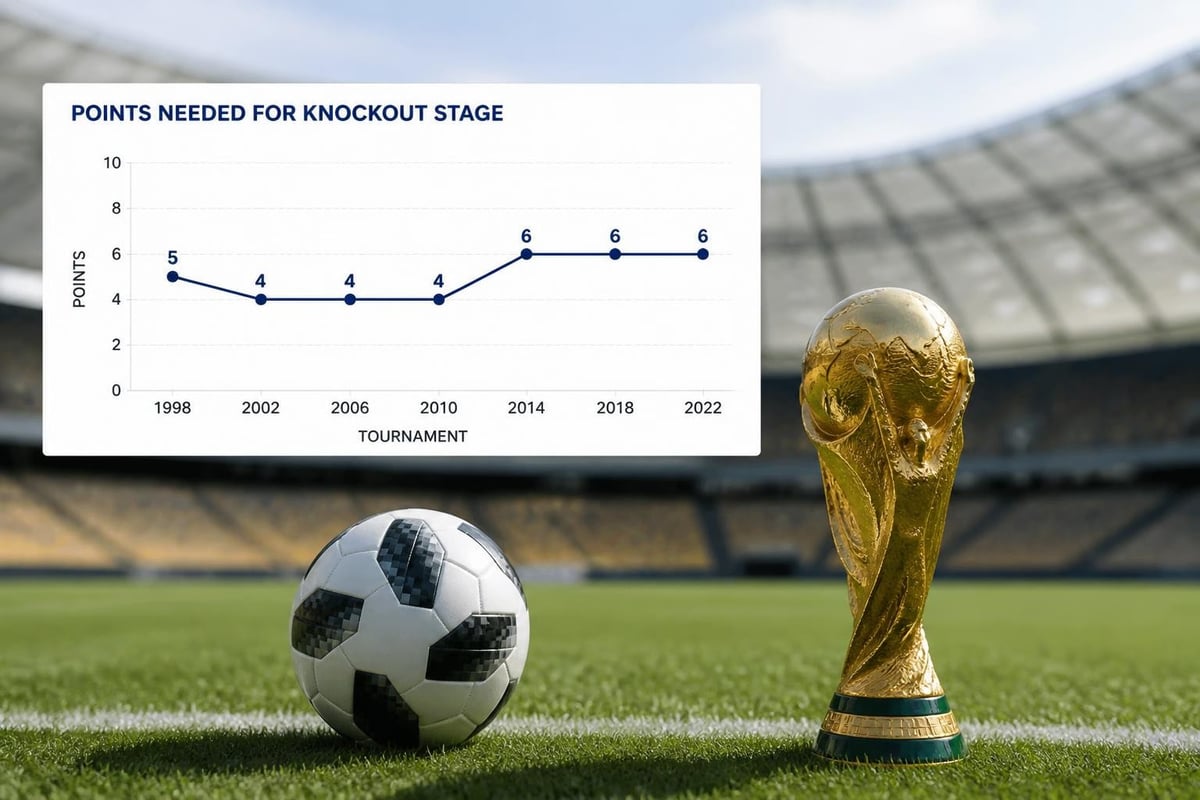
Examining world cup team points patterns across previous tournaments reveals consistency in how many points teams need for advancement. While the 2026 format introduces structural changes, historical benchmarks provide useful reference points for understanding group stage dynamics.
| Tournament Year | Average Points for Group Winners | Average Points for Runners-Up | Lowest Points for Advancement |
|---|---|---|---|
| 2022 (Qatar) | 7.0 | 5.1 | 3 |
| 2018 (Russia) | 7.2 | 5.3 | 4 |
| 2014 (Brazil) | 7.1 | 5.0 | 4 |
| 2010 (South Africa) | 6.8 | 5.2 | 3 |
These historical averages suggest that accumulating five or more world cup team points provides strong advancement probability regardless of tournament format variations. The consistency across decades indicates that team quality distributions remain relatively stable despite geographic host changes.
Strategic Team Selection for Points Maximization
National team coaches approach squad selection and match lineups with world cup team points accumulation as the primary objective. Balancing offensive ambition against defensive stability determines whether teams convert performances into maximum points.
Googly11 India provides comprehensive fantasy cricket guides that help users understand similar selection principles when building virtual teams. The strategic thinking required for maximizing fantasy cricket points-evaluating player form, match conditions, and opposition quality-mirrors the analytical process national team coaches employ when optimizing for world cup team points.

Coaches must evaluate numerous factors when selecting starting lineups:
- Form versus reputation: Whether to select established stars or in-form players
- Tactical flexibility: Balancing specialists against versatile players who adapt to match situations
- Fitness management: Distributing playing time to prevent injuries while maximizing points
- Opposition analysis: Tailoring selections to exploit specific weaknesses
- Tournament phase considerations: Adjusting risk tolerance based on current point standings
The 48 national teams participating in 2026 bring diverse tactical philosophies to points accumulation. Some nations prioritize defensive solidity to secure draws against stronger opponents, while others pursue aggressive attacking football to maximize goal difference advantages.
Predictive Modeling of Team Points
Advanced statistical methods and machine learning approaches help forecast world cup team points totals before tournaments begin. These predictive models incorporate team strength ratings, historical performance data, and match-specific contextual factors to generate probability distributions for group stage outcomes.
Research on forecasting World Cup results using large language models demonstrates growing sophistication in predictive analytics for international football. While uncertainty always exists in sports outcomes, probabilistic models provide useful benchmarks for expected world cup team points ranges.
Key variables in predictive models include:
- FIFA world rankings and Elo ratings
- Recent competitive match results
- Player availability and squad depth
- Home field advantage considerations (for host nations)
- Historical performance in major tournaments
- Coaching experience and tactical systems
These modeling approaches share conceptual similarities with fantasy cricket prediction systems, where algorithms help users make informed decisions about team compositions and player selections based on historical performance patterns and current form indicators.
The Economic Impact of Points Outcomes
World cup team points directly influence economic outcomes for participating nations through prize money distribution, sponsorship value increases, and tourism revenue generation. Teams advancing through group stages earn substantially higher financial returns than those eliminated early.
Beyond direct financial rewards, successful point accumulation enhances national team brand value and creates long-term commercial opportunities. Players from teams earning high world cup team points totals typically see increased transfer values and endorsement opportunities following tournaments.
The parallel economic dynamics in fantasy cricket platforms like Googly11 demonstrate how performance-based reward systems drive engagement. Just as national teams pursue world cup team points for advancement and financial gain, fantasy cricket participants optimize team building strategies to maximize contest winnings through strategic player selections.
Confederation Differences in Points Accumulation
Teams from different FIFA confederations demonstrate varying patterns in world cup team points accumulation due to playing style differences, competitive balance within regions, and developmental resources. Research on confederation ranking and slot allocation reveals systematic performance variations across regions.
European and South American teams historically accumulate higher average world cup team points than teams from other confederations, though African and Asian representatives occasionally produce breakthrough performances. These regional patterns influence how analysts forecast group stage outcomes and advancement probabilities.
Understanding confederation-specific characteristics helps predict which teams might outperform or underperform expectations in world cup team points accumulation. Teams from highly competitive domestic leagues often demonstrate greater tactical sophistication and resilience in tight matches that determine crucial points.
Alternative Tournament Formats and Points Systems
While the current world cup team points system uses the standard three-points-for-a-win structure, researchers continue exploring alternative tournament designs that might produce different competitive dynamics. Studies on double elimination formats suggest structural variations could alter how teams approach group stage matches.
Some proposed alternatives include:
- Bonus points for scoring multiple goals: Rewarding attacking football beyond match results
- Penalty shootout points: Awarding partial points for ties decided by kicks
- Progressive point values: Increasing point rewards in later group matches
- Performance-based bonus points: Additional points for fair play or entertainment value
These experimental approaches remain theoretical for FIFA tournaments, but they illustrate ongoing debates about optimal competitive structures. The current world cup team points system balances simplicity with fairness, making outcomes transparent while rewarding consistent performance across multiple matches.
Real-Time Points Tracking and Fan Engagement
Modern digital platforms enable fans to monitor world cup team points in real-time throughout tournaments, creating enhanced engagement opportunities and supporting in-match betting markets. Live standings updates, automated scenario calculators, and advancement probability trackers transform passive viewing into interactive experiences.
This technological integration parallels developments in fantasy cricket platforms where live match tracking allows participants to monitor player performances and adjust strategies dynamically. The convergence of sports consumption and data-driven engagement reshapes how fans interact with world cup team points systems.
Social media amplifies points-related discussions, with fans analyzing scenarios, debating tiebreaker outcomes, and celebrating advancement milestones. The communal aspect of tracking world cup team points creates shared experiences that transcend individual match results and build tournament narratives.
Understanding world cup team points systems transforms how fans engage with international football tournaments, revealing the strategic depth beneath surface-level match results. The 2026 expansion to 48 teams introduces new complexities in points accumulation and advancement scenarios that reward analytical thinking and tactical awareness. If you enjoy the strategic elements of analyzing team performance and point systems, Googly11 offers fantasy cricket contests where your analytical skills directly impact your success, allowing you to build virtual teams and compete based on real player performances in cricket matches.