Home/Cricket News/Axar Patel leapfrogs Ravindra Jadeja in India's 2027 World Cup plan
Axar Patel leapfrogs Ravindra Jadeja in India's 2027 ODI World Cup blueprint after England opener
India's selectors have spent the last fortnight quietly redrawing the spin-bowling all-rounder slot on the road to the 2027 ODI World Cup in South Africa. The pivot point, a Googly11 news-desk retrospective shows, was the opening ODI in Birmingham on 16 July 2026, where Axar Patel's unbeaten 57 and 4 for 62 turned a midfield selection debate into something closer to a settled first-choice call. Ravindra Jadeja, the long-time incumbent, has not been discarded from the ODI squad, but the primary role is no longer being mapped around him.
· Googly11 News Desk · 11 min read · Retrospective on a 16 July 2026 match · Cricket News
Compliance Notice: Googly11 is a skill-based fantasy sports platform operating in India. This product is available only to users 18+ in permitted states. Fantasy sports involve skill and strategy; outcomes depend on real-world match performance. Please play responsibly. Check local regulations before participating.
1. What actually happened on 16 July 2026 at Edgbaston
The opening ODI of India's tour of England at Edgbaston gave Axar Patel the kind of stage the selectors had quietly wanted to see him on for eighteen months. Batting at number seven in an innings that had lost early rhythm against the new ball, Axar finished on an unbeaten 57, taking the chase into a controllable phase before a lower-order cameo sealed it. With the ball, he returned 4 for 62 in ten overs, mixing the arm-ball with a fuller length that kept England's middle order honest through the middle phase. India won, and the post-match conversations inside the dressing room were less about the result than about what Axar's match meant for the next eighteen months of selection.
The Birmingham numbers matter because the surface was not a turner. India's spinners had to compete against pace on a length and beat the bat with control rather than with exaggerated spin. Axar did that. He did not produce a magical spell, and his batting was not an explosive hundred. What he produced was the shape of the role selectors actually want for South Africa in late 2027: a left-arm spinner who can hold an end for ten overs, bat in the top seven without panic, and field sharply in the ring. That shape is what moved him above Ravindra Jadeja in the planning notes the BCCI selectors have been carrying into the next cycle.
2. The Times of India report that put the question on the table
A Times of India report in mid-July, sourced to a BCCI official familiar with the selection discussions, made the position clearer than previous off-the-record comments had. The headline that the report carried was essentially that Ravindra Jadeja was no longer being actively considered as a first-choice ODI option. The framing was careful — Jadeja was not dropped, and he remained available for selection — but the operative word was "actively." It signalled that the planners had moved on from the assumption that the spin-bowling all-rounder slot would default back to him once form dipped or conditions turned.
The BCCI source attributed the shift to two specific factors. The first was Jadeja's declining white-ball bowling form, particularly his reduced wicket-taking threat against right-handers who had worked out how to use the depth of the crease against his arm-ball. The second was his reduced power-hitting in the death overs, which had been a quietly decisive part of his previous selection case. When the death-overs hit-rate fell, his overall batting value dropped, and the package no longer out-scored the package that Axar was building. The 2025 Champions Trophy inclusion in Dubai had been framed as a venue-specific call — Dubai was expected to turn, and Jadeja's record on turning tracks was still strong — and not as evidence of an ongoing trust in him for sub-continental conditions.
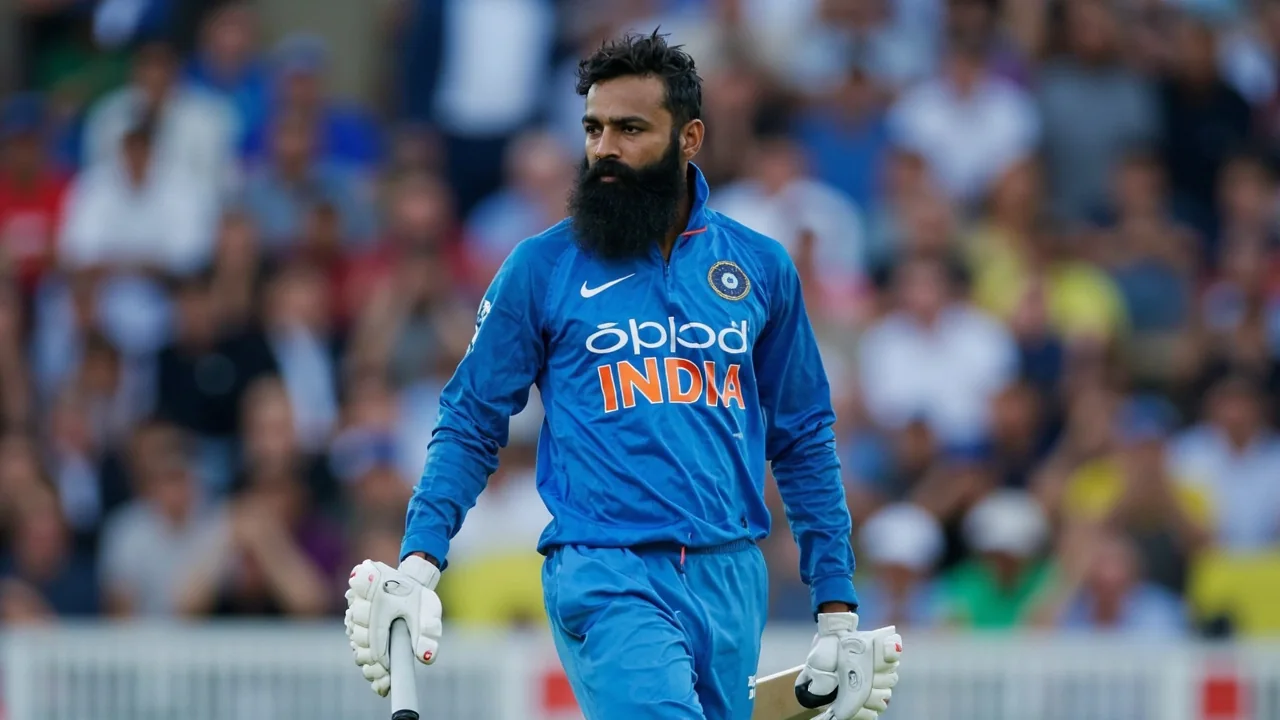
Figure 1: A left-arm spinner in delivery stride — the Birmingham match centred on this kind of control moment rather than on big-spin variation.
3. Why South Africa's 2027 venues change the calculus
The ICC's allocation of the 2027 ODI World Cup to South Africa has been the backdrop to every selector's conversation since late 2025. Indian pitches, including the surfaces built for bilateral ODI cricket at home, are generally expected to offer turn from around the tenth over onwards. South African pitches, by contrast, are expected to offer more pace and bounce than turn, and to reward bowlers who can hit the hard length and vary their pace. That means the lead spinner in India's XI for the World Cup will probably need to take a back seat to the pace attack on most surfaces, and to make his runs at the bat rather than with the ball.
The implication for the all-rounder selection is direct. The role requires someone who can bat in the top seven and offer ten useful overs even on surfaces where the ball does not turn sharply. Kuldeep Yadav, the wrist-spinner, has been pencilled in as a match-up option against right-hand-heavy XIs, but he is not a top-seven bat. Jadeja is a top-seven bat, but his bowling value in non-turning conditions has been the part of his game that has come under question. Axar Patel sits at the intersection: a left-arm spinner who can also bat, who can field, who can hold his end against pace, and who can rotate strike without forcing the innings. The selectors are increasingly mapping the role around him.
4. What Axar said in Birmingham about his own form cycle
After the match, Axar Patel was candid about the stretch that had led up to it. He told the post-match press conference that he had been "going through a difficult stretch" with the bat, and that he had been "trying to hit the ball too hard during the T20Is" before recalibrating his approach. The choice of words matters. He did not describe a sudden technical fix, and he did not claim a rediscovery of his best game. He described a managed shift in tempo — moving from a forced-hitting T20 mode back to the controlled tempo that white-ball one-day cricket demands.
For fantasy readers who follow Axar across formats, the comment is a useful marker. His T20I run between late 2025 and mid-2026 was inconsistent, partly because he was being asked to clear the inner ring against bowlers who had figured out his preferred scoring zones. Birmingham showed the recalibration: an innings built on placement, strike rotation, and occasional boundary rather than on attempted sixes. That is the version of Axar that the BCCI selectors want to see across the next eighteen months of one-day cricket, and the version that Googly11 fantasy users should price in when picking captaincy options.
5. The workload question on a five-match ODI series
India's tour of England in July 2026 is structured as a five-match ODI series, and the schedule matters as much as the result of the first match. With three matches still to play at the time of the selectors' planning notes, the question of how much Axar should bowl is genuinely live. Birmingham asked him to bowl his full ten. That is not always possible on a five-match schedule, particularly when the team wants to manage his batting workload in the lower middle order and keep him fresh for the bigger contests that follow in the calendar.
The selectors have, on recent evidence, shown a willingness to rest frontline bowlers through one or two matches of a five-match ODI series when the squad depth allows it. Axar's name is now part of that conversation in a way it was not before the Birmingham match. If he plays all five matches, his ODI match count between July 2026 and the 2027 World Cup will rise quickly. If the selectors prefer to rotate him, they will need a credible back-up all-rounder in the squad — and that is precisely where Washington Sundar, Nitish Kumar Reddy and the returning Hardik Pandya sit in the discussion.
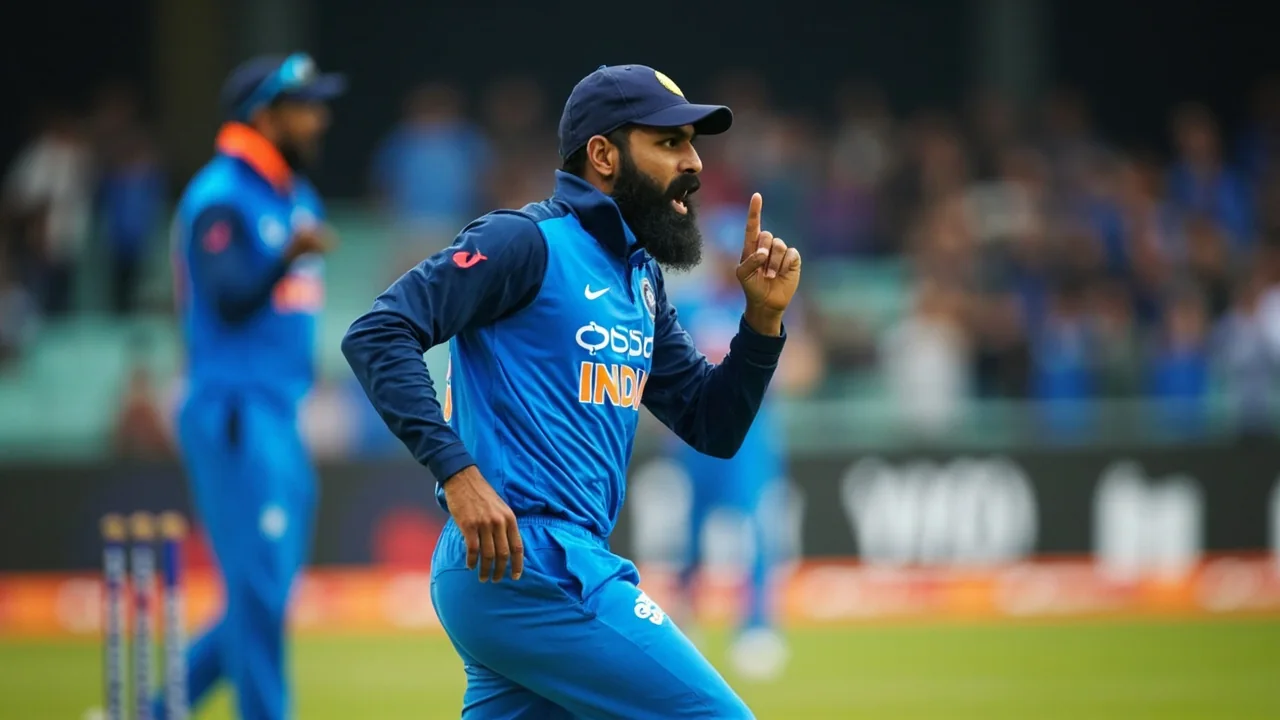
Figure 2: The captain's fielding huddle — exactly the moment where the spin-bowling all-rounder slot gets mapped on the field, not in the press box.
6. What this means for Ravindra Jadeja's future ODI role
The shift does not end Ravindra Jadeja's ODI career. It does, however, reduce the room for him to be a default pick on non-turning surfaces. The selectors are expected to keep him in the wider ODI squad for the next eighteen months, particularly for home series where conditions are expected to assist turn. He remains one of the safest fielders in the side, and his left-arm spin retains a match-up value against strong left-handed top orders. But the days of him being an automatic selection regardless of conditions look to be behind him.
The honest read of the BCCI source's framing is that Jadeja's role going forward will be that of a situational specialist rather than a fixture in the XI. He will probably play on turning tracks, against particular opposition combinations, and in matches where the team wants an extra batter in the lower order without compromising fielding quality. He will probably sit out on flat surfaces where his bowling threat is reduced and his death-overs hitting is no longer dominant. That is a meaningful step down from the role he held through most of the last World Cup cycle, but it is also a role that keeps him relevant in the squad and in the team's medium-term plans.
7. The Kuldeep Yadav question, and why he is not the alternative to Axar
Readers following the selection debate often assume that Axar Patel's rise must mean Kuldeep Yadav is being pushed out of the XI. The two players occupy different slots. Kuldeep is a specialist wrist-spinner who is at his most dangerous on turning tracks and against right-handers who cannot read him out of the hand. Axar is a left-arm spinner who can also bat. India will, in most World Cup XIs, want both in the squad. The selection question is not Axar or Kuldeep; it is Axar plus Kuldeep, or Jadeja plus Kuldeep, in the spin column.
The shift therefore does not threaten Kuldeep's place. It changes the batting depth of the side, because Axar batting at seven gives India a longer batting line-up than Jadeja at seven, and it changes the death-bowling options, because Axar's accuracy at the back end of an innings has been more reliable than Jadeja's left-arm spin on flat decks. Those are the two specific ways the planning notes are likely to be adjusted, and they explain why Axar has moved up the queue without any single obvious demotion of Kuldeep or anyone else.
8. The eighteen-month runway to South Africa
The 2027 ODI World Cup is roughly eighteen months away from the July 2026 England tour, which means the selectors have just enough time to test combinations, manage workloads, and give themselves the option of changing the plan if the next cycle of results demand it. India's ODI calendar over that runway includes home and away series against Australia, England, South Africa, West Indies, Sri Lanka, New Zealand and Bangladesh, plus the Asia Cup window and the lead-up tours to the World Cup venues.
The honest expectation from the selectors, as signalled by the Times of India report, is that Axar will get an extended run through that window as the primary spin-bowling all-rounder. He will be expected to deliver Birmingham-level performances in tougher conditions — on South African wickets, on Australian wickets, and on Indian pitches where the ball does not turn as sharply as the home crowd expects. If he delivers, the role is his into 2027. If he does not, the planners have time to revisit the conversation, and the conversation may well swing back to Jadeja or to a younger alternative such as Washington Sundar.
9. What Googly11 readers should take from the Birmingham match
For Indian fantasy users running ODI contests on Googly11, the practical read of the Birmingham match is short. The primary spin-bowling all-rounder slot in India's ODI XI is being mapped around Axar Patel for the next eighteen months. That means his captaincy value, his points-per-match expectation, and his selection-percentage across mega contests should be priced accordingly. It also means Ravindra Jadeja should not be priced as a default ODI selection on non-turning surfaces; he is now a situational pick. As the England series continues and the rest of the ODI calendar plays out, the Googly11 cricket news desk will keep tracking Axar's workload, Jadeja's situational call-ups, and the squad signals that move captaincy maths before each match.
The other read is about workload. India will probably manage Axar's overs across a five-match ODI series, which means his points-per-match ceiling in any single match may be slightly lower than a Jadeja-at-his-peak match. But his floor is also higher, because he will be picked more often and is less likely to be dropped for a single quiet game. Captaincy calls should reflect that: Axar is a safer captaincy option than he was six months ago, and his points-per-match expectation is more stable. That is exactly the kind of profile fantasy readers want from a top-seven bat who can also send down ten overs of left-arm spin.
10. The next check: how Axar handles South Africa at home
India's next ODI assignment against South Africa, scheduled in the autumn of 2026, will be the first real test of the post-Birmingham plan. South Africa's bowlers will not give Axar the same kind of length that England's pacers did at Edgbaston, and the surfaces will reward batsmen who can hit down the ground. If Axar adapts his tempo back to a T20 mode in those matches, the selectors will read it as a regression. If he keeps the controlled, strike-rotating batting that Birmingham showcased, the selectors will treat it as confirmation.
That autumn series is the next inflection point on the road to the 2027 World Cup. Everything between now and then — the squad rotations, the workload management, the captaincy calls — should be read through the question of whether Axar's Birmingham performance was a one-off peak or a new baseline. The early evidence is that it is the latter. The harder evidence will come in South Africa, in Australia, and on the flatter home surfaces that traditionally test Indian all-rounders most.
11. Frequently asked questions on Axar Patel and the India ODI plan
What did Axar Patel do in the opening ODI against England in Birmingham?
Axar Patel scored an unbeaten 57 batting in the lower middle order and took 4 for 62 with the ball. India won the match, and the dual contribution was the kind of performance the BCCI selectors had been waiting to see from him in a high-profile ODI.
Is Ravindra Jadeja out of India's 2027 ODI World Cup plan?
Selectors are not actively considering Ravindra Jadeja as a first-choice ODI option. He remains in the wider squad and will be used situationally on turning surfaces, but the primary spin-bowling all-rounder slot is being mapped around Axar Patel.
Where will the 2027 ODI World Cup be played?
The 2027 ODI World Cup will be played in South Africa. Indian selectors expect South African pitches to offer pace and bounce rather than turn, which shapes the kind of all-rounder they want at number six or seven.
Why is Axar Patel preferred over Kuldeep Yadav for the lead all-rounder role?
Axar Patel is a top-seven bat who can also send down ten overs of left-arm spin, which matches the demand profile of a South African World Cup. Kuldeep Yadav remains in the selectors' thinking as a wrist-spin match-up option, but he is not a top-seven bat, so the all-rounder slot fits Axar more cleanly.
What did Axar Patel say after the Birmingham match?
Axar said he had been "going through a difficult stretch" and had been "trying to hit the ball too hard during the T20Is" before recalibrating his approach. He framed the Birmingham innings as a return to a controlled method rather than a sudden technical breakthrough.
How long does Axar have to lock down the role before the 2027 World Cup?
The runway is roughly eighteen months. Selectors will test Axar across the next cycle of home and away ODIs, and his place at the 2027 event depends on replicating Birmingham-level performance in tougher conditions over that window.
Lock your India ODI fantasy XI on Googly11
Axar Patel at seven, Kuldeep Yadav as the wrist-spin match-up, and the captaincy call priced against the next eighteen-month ODI cycle. Rs 1 contests, sub-30-minute UPI withdrawals, and a fresh-signing filter for every confirmed squad call. Start with code Googly11100.