
What is the latest IPL brand value, and which firm published it?
The 29 July 2026 Houlihan Lokey report puts the Indian Premier League at an estimated $20.6bn (£15.5bn), a 10.3% year-on-year rise.
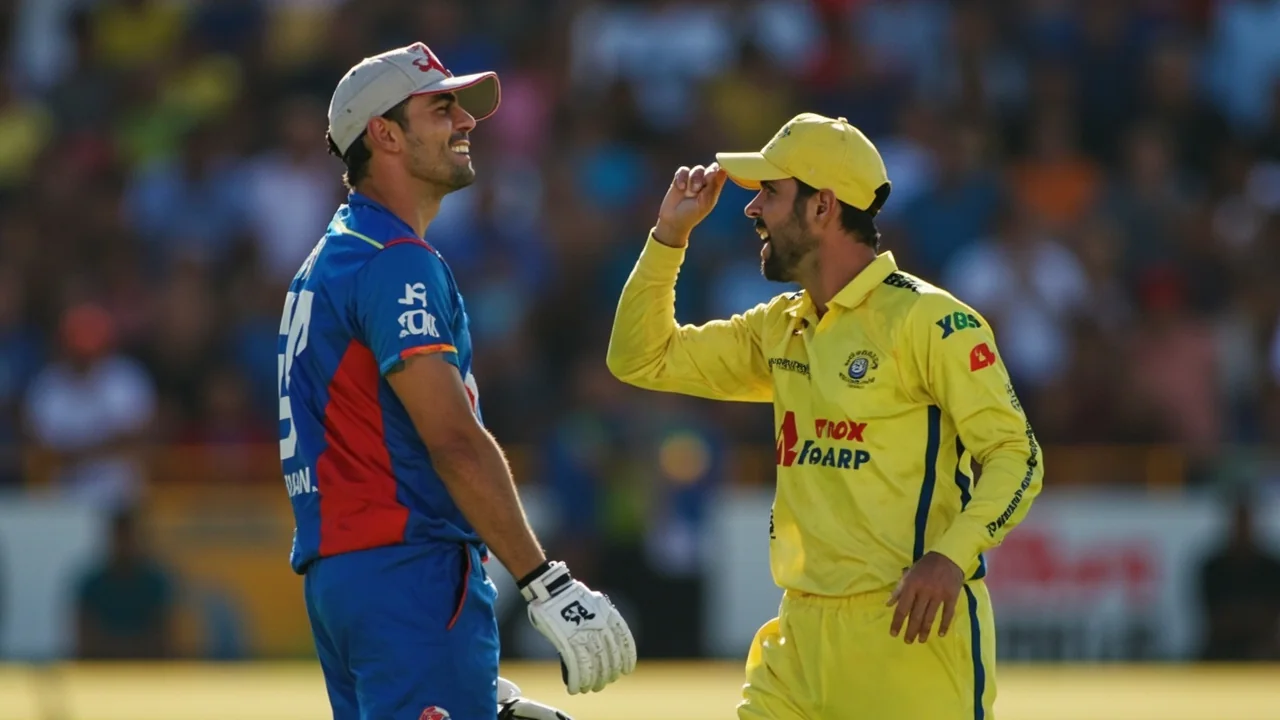
A 29 July 2026 Houlihan Lokey report has put the Indian Premier League's brand value at an estimated $20.6bn (£15.5bn), a 10.3% rise on the year before, and has placed the league ahead of every other global sports property except the NFL when measured on a per-match basis. Royal Challengers Bengaluru, winners of the last two IPL titles, are now the most valuable franchise at $312m (£234.5m); the Rajasthan Royals have just been sold to an ownership group joining Lakshmi Mittal and his family with Adar Poonawalla in a $1.65bn deal. The Googly11 news desk reads what those numbers mean for the squads Indian fantasy users will be picking from in the next auction cycle.
· Googly11 News Desk · 9 min read · Cricket News
The Houlihan Lokey valuation released on Wednesday, 29 July 2026 puts the Indian Premier League's brand value at an estimated $20.6bn, equivalent to roughly £15.5bn at the rates used in the report. That is a 10.3% rise on the previous valuation from the same firm, a step up that took the league past the symbolic $20bn line for the first time. The figures are not the result of a fan poll or a sponsorship tally — Houlihan Lokey is a global investment bank whose sports-advisory work underwrites a number of franchise transactions, and the methodology combines commercial revenues, broadcast rights, brand-equity modelling and franchise-level multiples.
What makes the $20.6bn figure matter is the league it pulls the IPL into. The same report places the IPL ahead of every other global sports property except the National Football League of the United States when the comparison is done on a per-match basis. That is a tightly drawn comparison — the NFL plays far fewer fixtures per season than the IPL — but it captures the analyst view that a single IPL regular-season match now generates more commercial value than a regular-season fixture in any league outside the United States.
For fantasy users, the macro-level takeaway is not that the IPL has become a more watchable league. It is that the ten franchise owners now operate inside a brand whose commercial surface area has expanded enough to support larger squad budgets, deeper support staff, and longer auction wars for the role-secure players. Those structural shifts land directly on the fantasy squads Indian users pick from on a contest-by-contest basis, and they are the starting point for everything that follows below.
Royal Challengers Bengaluru are now the most valuable franchise in the league at $312m (£234.5m). The number reflects both on-field performance and brand monetisation. RCB have been the IPL champions in each of the past two seasons, and Virat Kohli's long association with the franchise gives RCB one of the strongest individual player brands in the league. The Houlihan Lokey figures treat that star-power premium as part of the franchise valuation rather than as a standalone commercial asset.
The recent change of ownership is the more immediate data point. A consortium that includes Blackstone has acquired Royal Challengers Bengaluru in a deal worth nearly $1.8bn, the most expensive franchise transaction in IPL history. The previous benchmark, the Delhi Capitals deal, sat well below the $1.5bn mark in 2024, so RCB is now both the most valuable franchise and the most expensive one ever sold. The consortium structure — institutional capital at the head, with the operating team kept in place — is a model that mirrors what has been happening in MLS, IPL-adjacent women's leagues and parts of European football over the last 36 months.
For Indian fantasy users, the practical effect is on squad depth rather than headline stars. An ownership group that has paid $1.8bn for a franchise is unlikely to be passive about retention. Expect RCB to be aggressive in the next mega-auction on players whose role can be defined cleanly: a fifth specialist seamer for the back end of an innings, a powerplay enforcer at the top, an Indian wrist-spinner who can sustain a four-over quota. Those are the role profiles that turn a paying squad into a winning one, and they are exactly what a financial buyer wants to be able to show on the table.
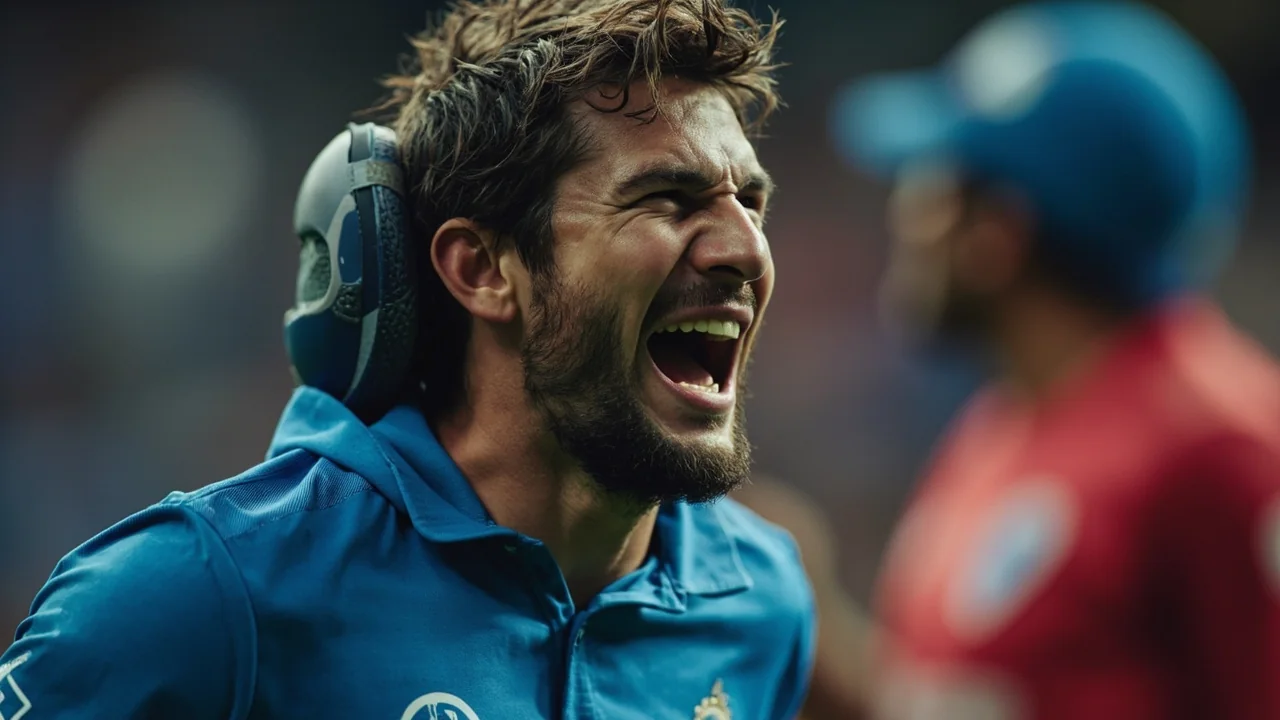
The Rajasthan Royals have been sold separately, with Lakshmi Mittal and his family joining Adar Poonawalla in the new ownership group in a deal valued at $1.65bn. The structure brings a global industrial family into Indian cricket ownership for the first time at the IPL level, alongside a healthcare-sector entrepreneur who is already part of a privately backed investment network. Poonawalla's standing through the pandemic and his family's vaccine-manufacturing footprint give the group a brand that travels well in any international league dialogue; Mittal's steel-and-mining position gives it the financial scale to absorb multi-season operating losses if a title window opens.
Royals have been one of the IPL's more volatile commercial stories. They were champions in the very first season, slipped down the value table through the 2010s, rebuilt around a strong Indian core in the early 2020s, and have been one of the more active players in the global trade windows. The new ownership group inherits a squad that has already been through that churn, which is a useful starting point: a buyer pays less to reposition a brand that has cycled through several captains than one that has been steady but unspectacular.
The fantasy-side implication is similar to the RCB one, just framed around a different auction profile. Royals have historically bet on overseas all-rounders and on wrist-spin options in the middle overs. A buyer group with global horizons is more likely than a regional sponsor-led ownership to pay the premium for a third overseas slot if the World Cup calendar allows it, and to support the franchise with a deeper performance team. Fantasy users expecting another quiet Royals auction should reset that assumption.
The valuation deserves to be read alongside the on-field record, not separately from it. Royal Challengers Bengaluru have now won back-to-back IPL titles, and the trophy haul has been the single biggest driver of the $312m franchise tag. The team's batting has been built around Virat Kohli in a defined role, around a settled Indian top order, and around a bowling unit that has identified a small number of high-leverage overs per match and executed them consistently. That is the same template the team used in the first half of the last decade, but with the support staff and the analytical depth to hold it for an entire season rather than fading in the knockouts.
Two trade-window decisions matter most for the fantasy read. First, the franchise has invested in a third specialist pacer who can bowl the powerplay as well as two at the death, which spreads the bowling load and keeps Kohli out of the heavy-lifting overs. Second, RCB have kept the middle order thin but role-clear, with a finisher, a stabiliser and a spin-bowling all-rounder occupying distinct batting positions. Both choices are visible in the match-by-match points accumulation and are easy to carry into the team-builder audit before the next deadline.
The risk for RCB, in fantasy terms, is concentration. When three or four batters carry most of the run-scoring load and a single bowler takes most of the wickets, a fantasy XI built around the franchise becomes a single-script build. A two-line wobble — Kohli missing a game through injury, or the death bowler going off-colour for two matches — collapses the upside. The $1.8bn ownership group has the cash to fix that with bench depth; until they do, fantasy users should treat RCB as a high-ceiling, single-script franchise.
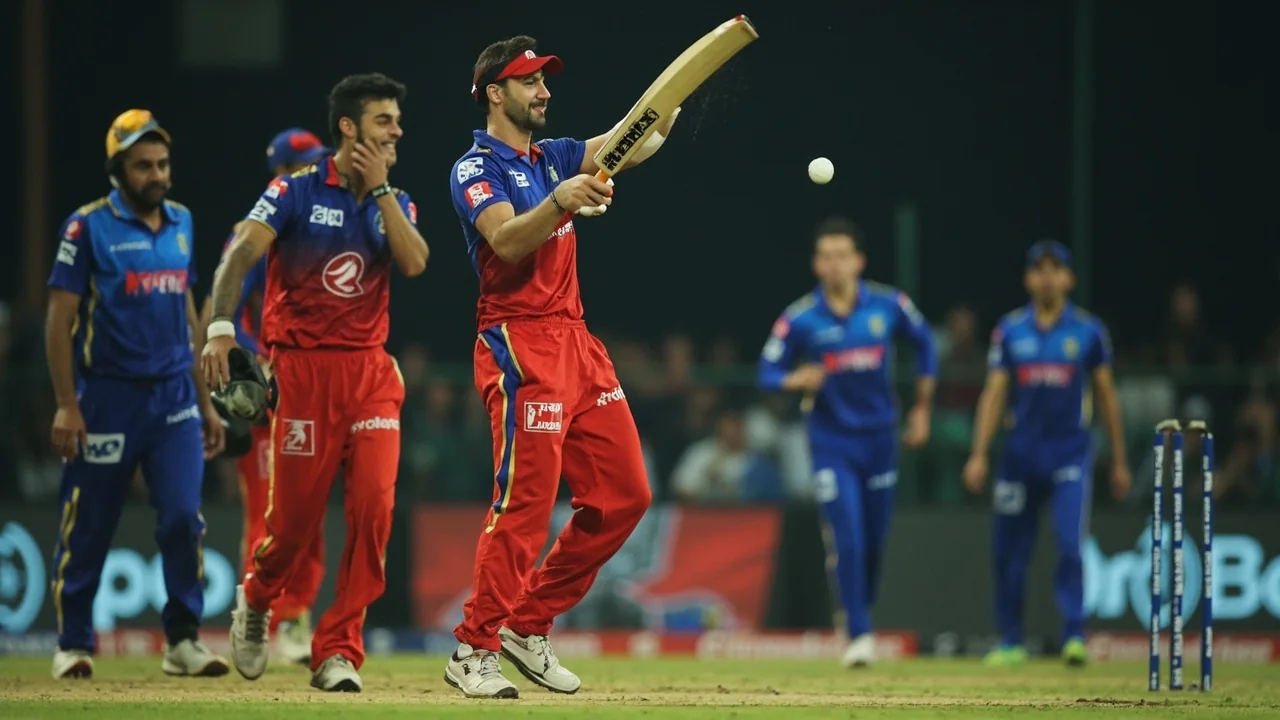
The Royals' playing XI has been in a transition of its own, which the new ownership group is buying into at exactly the moment when franchise-level resets tend to be cheapest. The team's batting has rotated through three or four opening combinations in the last three seasons, and the bowling unit has split between pace-heavy and spin-heavy match-day combinations. That kind of churn is what gives a new owner a clean platform — there are no entrenched contracts to honour and no captaincy position already politicised through years of choice.
The likely first move from the new group is the choice of a long-term Indian captain. The franchise has historically rotated that responsibility, sometimes within a single season. A buyer paying $1.65bn will want a captain whose selection is durable across formats and auction windows — a player around whom the rest of the squad can be built. The fantasy read is that any pre-auction rumour about the Royals captaincy should be treated as signal about the auction budget, not just about the team-sheet.
Royals have also been one of the more active franchises in the trade window over the last two seasons. The new ownership group is unlikely to slow that down, and may accelerate it: cross-league partnerships (with the Big Bash, the SA20, or Caribbean Premier League franchises) become easier when the buyer can point to a global industrial network. Fantasy users who track the SA20 window closely should treat Royals rumours in that window as quasi-official IPL signals.
Harsh Talikoti, the Houlihan Lokey banker who led the report, described cricket as becoming a globally owned, institutionally backed asset class whose evolution accelerated further in 2026. That single line captures the broader commercial argument: a property that was once funded by regional industrialists and a handful of Bollywood-and-cricket crossover owners is now financed through Blackstone, sovereign-linked capital, and global family offices. The change is structural, not cosmetic.
The acceleration through 2026 is the second half of the same sentence. Three transaction categories have driven it. First, the women's Premier League brought a new asset class online at the same time as the men's league, and the second-cycle valuations for those franchises were already above the first-cycle numbers. Second, the IPL's media rights cycle produced a step-change in the broadcast-and-digital revenue stack. Third, the franchise-level sales — RCB at $1.8bn, Royals at $1.65bn — bracketed the year as the moment when private equity entered the league in a sustained way.
None of those changes need to be felt immediately by an Indian fantasy user in a daily contest. They land indirectly, through deeper squads, more aggressive retention cycles, more global all-rounders being available in the auction, and a slightly bigger cap on overseas slots if the governance cycle moves that way. Those downstream effects are the part of the story that matter at the team-builder screen.
The IPL's value story and the squad stories are the same story read at different levels. Three practical implications follow for fantasy users reading the next auction and the next mega-cycle.
The first is auction aggression in defined roles. A franchise that has paid between $1.65bn and $1.8bn for a squad will not allow a defined-role player to walk into the auction without a serious counter-bid. RCB and Royals will both push hard on the kind of role-clear profiles Indian fantasy users have come to identify as captain candidates: a powerplay wicket-taking seamer, a death-overs specialist, a wrist-spin anchor for the middle overs, and a top-order batter who can play both pace and spin through the innings.
The second is overseas slot management. The IPL's squad rules allow four overseas players in the playing XI. With global franchises now better funded, the cross-league trade of all-rounders is likely to deepen. Fantasy users should watch the SA20 and Caribbean Premier League competitions as the primary feeder windows and adjust their expectations accordingly.
The third is the role of the Indian core. RCB and Royals have both kept the Indian core stable through the recent windows. As private equity enters, expect the next auction to tilt further toward retaining Indian seam-bowling all-rounders who can play three roles in the XI. For fantasy, that means a class of player whose value was previously capped by competition for the spot will become harder to acquire later in the auction, and earlier picks of that profile will look more attractive.
The Houlihan Lokey release ranks IPL franchises by current valuation. The five figures worth keeping in mind are not all the same shape — some are valuations, some are recent transaction prices, some are projections — but together they describe the league's commercial centre of gravity. Royal Challengers Bengaluru head the table at $312m. Mumbai Indians and Chennai Super Kings, the two franchises whose values have been most stable through cycles, sit close behind. Kolkata Knight Riders and Delhi Capitals, both with deep squads and active trade windows, fill the next tier. The newest entrants — Gujarat Titans, Lucknow Super Giants, and the more recent franchises — sit below that tier and are the ones whose valuations are most likely to move through the next cycle.
The $20.6bn figure does not change much when one franchise rises and another slips. The valuation methodology smooths out single-franchise events. What it captures is the league as a portfolio, and the way the asset class is being priced by the global market. That distinction matters more for the longer-term squad planning than for the next deadline, but it is the difference between understanding a single contest and understanding the league the contest sits inside.
The Houlihan Lokey report places the IPL ahead of every global sports property except the NFL on a per-match basis. That is a narrow but precise claim, and it deserves to be unpacked. Per-match value is the commercial revenue generated for every fixture the league plays across a season. The NFL plays roughly 272 regular-season games, the IPL roughly 74. The number the report uses normalises across that fixture gap and asks how much each match is worth in isolation.
The reason the per-match figure favours the IPL is not that the NFL is undervalued. It is that the NFL has chosen a longer regular season without a playoff expansion, which dilutes the per-match commercial surface. The IPL, by contrast, plays a tighter fixture schedule with a longer playoff window that attracts premium pricing. Both structures are defensible; both are rational; the resulting comparison reads more favourably for the shorter-format league.
For fantasy users, the per-match rating supports a simple judgement. Each IPL fixture is, on average, a more commercially valuable event than a regular-season match in any other major league. That scale shows up in broadcasting deals, in stadium advertising revenue, and in the live attendance figures that frame how each franchise operates. Those commercial inputs flow directly into squad budgets, and squad budgets flow directly into the auction table. The chain runs cleanly from the report to the team-builder screen.
The IPL began in 2008 with eight franchises and a four-week window. Eighteen seasons later, the league is a ten-franchise competition with a roughly ten-week regular season and a multi-week playoff, played in front of sold-out venues across India and broadcast in more than a hundred countries. By 2020 the league was estimated to generate more than $11bn a year for the Indian economy. That figure covers direct and indirect effects — match-day spending, tourism, broadcast production, merchandise, advertising — and it has grown alongside the brand-valuation curve since.
The 2020 figure also explains why franchise-level buyers can pay what they have paid in 2025 and 2026. The Indian economy in the 2020s has continued to expand the consumer and advertising base that the IPL feeds on, and the league has been able to deepen its commercial surface without depending on a single revenue stream. The combination of brand strength, broadcast scale and franchise-level capital is what justifies the headline numbers in the Houlihan Lokey report.
For the news desk, the 2008-to-2026 arc is the part of the story that frames everything else. The franchises that won the first IPL title are no longer in their original ownership hands. The broadcast partner has changed. The number of teams has changed. The format of the playoff has changed. What has not changed is the league's ability to keep generating enough commercial value to fund larger and larger transactions. That continuity is the part of the story fantasy users can rely on as the next cycle begins.
The 29 July 2026 Houlihan Lokey report puts the Indian Premier League at an estimated $20.6bn (£15.5bn), a 10.3% year-on-year rise.
According to Houlihan Lokey, only the NFL ranks ahead of the IPL globally when the comparison is done on a per-match basis.
Royal Challengers Bengaluru, two-time defending IPL champions and home to Virat Kohli, are now the most valuable franchise at $312m (£234.5m).
A consortium involving Blackstone acquired RCB in a deal worth nearly $1.8bn, the most expensive franchise transaction in IPL history.
The Royals were sold in a deal valued at $1.65bn, with Lakshmi Mittal and his family joining Adar Poonawalla in the new ownership group.
The IPL began in 2008. By 2020 it was estimated to generate more than $11bn a year for the Indian economy.
Harsh Talikoti of Houlihan Lokey described cricket as a globally owned, institutionally backed asset class whose evolution accelerated further in 2026.
The natural next chapter to follow is the auction cycle that follows the Blackstone-RCB and Mittal-Royals transactions. With two of the ten franchises having changed hands in the last few months and the Houlihan Lokey valuation at a record high, the auction table should reflect the new capital: more aggressive bids on defined-role players, longer retention cycles for the Indian core, and a sharper cross-league trade in the all-rounders India does not produce at the rate the IPL demands. The auction signals fantasy users care about — player retention, captaincy rumour, overseas-slot shopping — will arrive more densely than in the previous cycle.
For fantasy users running contests between now and the next mega-auction, the practical read is that the squads Indian fantasy users are picking from are about to get deeper, not shallower. A franchise that has spent $1.8bn on the franchise itself is unlikely to allow the playing XI to be the bottleneck on return. That is the underlying signal at the team-builder screen when you weigh an RCB or Royals stack against another franchise stack in the next contest. The Googly11 IPL squads and rosters desk carries the verified squad list, the role allocation per franchise and the latest auction rumours in one place, so the brand-value story and the squad story are kept together for the next deadline.
The Googly11 IPL squads and rosters desk keeps the verified squad lists, role allocations and latest auction rumours in one place, so the brand-value story and the squad story stay together for the next deadline.