

The Indian Premier League has transformed cricket entertainment globally, and the ipl fantasy league has become an essential companion for millions of fans. In 2026, fantasy cricket platforms offer sophisticated tools and competitive contests where strategic decisions separate casual participants from consistent winners. Whether you're building your first squad or refining advanced tactics, understanding the mechanics and nuances of fantasy cricket during the IPL season positions you to maximize points and compete effectively across different league formats.
Understanding IPL Fantasy League Fundamentals
The ipl fantasy league operates on a straightforward premise: select real cricketers within budget constraints, earn points based on their actual match performances, and compete against other participants for rankings and prizes. Each platform maintains specific rules, but core principles remain consistent across providers.
Budget Management and Team Composition
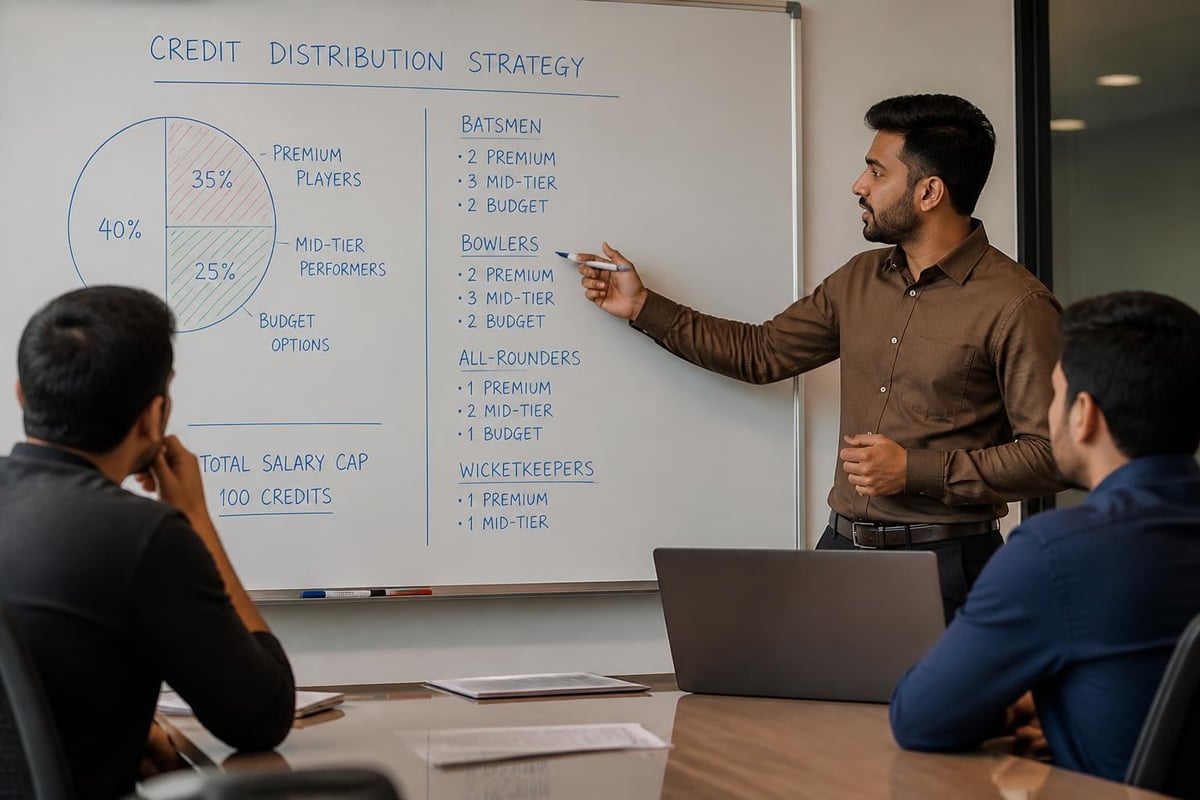
Most fantasy platforms allocate a virtual budget (typically 100 credits) to assemble an 11-player squad. This constraint forces strategic trade-offs between premium stars and value picks.
Your team composition must include:
- 4 batsmen who provide consistent run-scoring opportunities
- 3 all-rounders offering dual point-scoring potential
- 3 bowlers capitalizing on wickets and economy rates
- 1 wicketkeeper combining batting points with dismissal bonuses
Successful managers balance star power with budget efficiency. Premium players like Virat Kohli or Jasprit Bumrah consume significant credits, leaving less flexibility for other positions. Understanding player roles and strategic selection helps optimize your credit allocation across all positions.
Points Scoring System Mechanics
The IPL Fantasy League points system rewards multiple performance metrics beyond basic runs and wickets. Understanding these scoring nuances informs smarter selection decisions.
| Performance Category | Points Awarded | Strategic Implication |
|---|---|---|
| Runs scored | 1 point per run | Openers and finishers valuable |
| Wicket taken | 25 points | Strike bowlers essential |
| Catch held | 8 points | Good fielders add value |
| Captain bonus | 2x points | Selection becomes critical |
| Vice-captain bonus | 1.5x points | Risk management important |
Economy rate bonuses favor bowlers who restrict runs, while strike rate bonuses reward aggressive batsmen. This dual emphasis means context matters significantly when evaluating player prospects for specific matches.
Building Your Initial IPL Fantasy Squad
Team construction represents your foundation for the entire tournament. Poor initial selections create persistent disadvantages requiring multiple transfers to correct.
Player Selection Criteria and Research
Effective fantasy managers combine statistical analysis with contextual awareness. Recent form matters more than career statistics, especially in T20 cricket where momentum shifts rapidly.
Consider these evaluation factors:
- Current batting position in the actual team lineup
- Bowling workload and likelihood of completing four overs
- Home versus away performance splits at specific venues
- Head-to-head records against upcoming opponents
- Playing XI certainty based on team composition
The comprehensive IPL 2026 Fantasy guide offers detailed analysis of team dynamics and player roles across all franchises. This research investment before the season pays dividends throughout the tournament.
Differential Picks and Template Avoidance
While popular players earn their selection rates through consistent performance, including carefully researched differential picks separates you from the crowd. A differential player owned by less than 15% of participants can provide significant rank improvements when they perform well.
Identify differentials through:
- Analyzing batting order changes that elevate players into higher-impact roles
- Tracking pitch reports favoring specific bowling styles
- Monitoring injury returns of quality players at reduced ownership
- Recognizing undervalued all-rounders in evolving team compositions
Balance remains essential. A squad filled entirely with low-ownership punts increases variance and bust potential. Strategic differentiation targets one or two positions where your research identifies genuine edge.
Captain and Vice-Captain Selection Strategy
The captaincy decision represents the highest-leverage choice in the ipl fantasy league. Doubling points from a successful captain pick accelerates rank improvements, while backing a failure compounds the disappointment.
Form-Based Captaincy Decisions
Current form trumps reputation when selecting your captain. A player averaging 60 runs across their last five innings deserves consideration over a bigger name struggling at 25, regardless of career achievements.
Avoiding common fantasy IPL mistakes includes resisting the temptation to consistently captain the same player regardless of matchup quality. Rotating based on opponent strength, venue characteristics, and recent performance optimizes captaincy returns.

Safe Versus Aggressive Captaincy Approaches
Your league position influences optimal captaincy strategy. Leaders protecting rank advantage should favor safe, high-ownership captains who minimize rank volatility. Participants climbing the standings benefit from calculated risks on lower-owned premium options.
| League Position | Recommended Strategy | Captain Ownership Target |
|---|---|---|
| Top 100 | Conservative protection | 40%+ ownership |
| Top 1000 | Balanced approach | 25-40% ownership |
| Top 10000 | Moderate aggression | 15-25% ownership |
| Below 10000 | High-risk differentials | Below 15% ownership |
Vice-captain selection provides insurance against last-minute team changes. Choose a reliable performer from the same match to guarantee the 1.5x multiplier activates if your captain doesn't play.
Transfer Strategy and Wildcard Timing
The transfer system allows squad adjustments throughout the tournament, but unlimited changes carry consequences. Most platforms permit one free transfer per gameweek, with additional moves costing points or budget.
Value Tracking and Price Changes
Player prices fluctuate based on ownership changes and performance. Rising stars increase in cost, potentially locking you out if you delay transfers. Conversely, declining players lose value, eroding your team budget when you eventually sell them.
Savvy managers monitor price predictions and execute transfers strategically:
- Tuesday evening transfers typically occur before major price movements
- Banking free transfers for two weeks allows multiple changes without penalty
- Selling before drops preserves team value for future acquisitions
- Buying before rises secures emerging performers at lower prices
For detailed player insights and transfer recommendations, Googly11 India Fantasy Cricket Guides provide match-by-match analysis helping you identify the best transfer targets based on upcoming fixtures and form trajectories.

Wildcard Activation Strategy
The wildcard chip allows unlimited free transfers for one gameweek, completely rebuilding your squad. Timing this activation maximizes its value.
Optimal wildcard scenarios include:
- After international breaks when team compositions shift significantly
- Before double gameweeks to load up on teams playing twice
- Mid-season corrections after multiple poor selections compound
- Template pivots when the popular squad composition proves flawed
Activating your wildcard too early wastes its potential, while waiting too long prevents recovery from structural team problems. Most successful managers deploy wildcards between gameweeks 6-10, allowing initial trends to emerge while providing sufficient matches to capitalize on improvements.
Advanced Tactics for Competitive Advantage
As you master fundamental concepts, advanced strategies provide marginal gains that accumulate into significant rank improvements over a full season.
Chip Strategy Optimization
Beyond the wildcard, platforms typically offer additional chips with strategic applications. The bench boost activates all substitute players' points for one gameweek, while the triple captain awards 3x points instead of 2x.
Bench Boost Strategy: Target double gameweeks when multiple players in your squad face two matches. This doubles your bench's point potential, making the chip significantly more valuable than during standard weeks.
Triple Captain Strategy: Reserve this chip for the highest ceiling performer in the best possible matchup. Historical data shows opening batsmen against weak bowling attacks in batting-friendly conditions offer optimal ceiling outcomes.
Fixture Analysis and Planning
The team-by-team fantasy guide for IPL 2026 reveals fixture difficulty across upcoming weeks. Teams facing easier opponents deserve overweight allocation, while those encountering strong bowling attacks warrant reduced exposure.
Create a rolling three-week fixture difficulty matrix:
- Rate each team's bowling strength on a 1-5 scale
- Identify batsmen facing multiple weak attacks consecutively
- Target bowlers confronting lineups struggling against their style
- Time transfers to maximize favorable fixture runs
This forward planning prevents reactive transfers and positions your squad for sustained point accumulation rather than chasing last week's performers.
League Formats and Contest Selection
The ipl fantasy league offers various competition formats, each rewarding different strategic approaches. Understanding these distinctions helps you allocate time and focus appropriately.
Season-Long Leagues Versus Daily Contests
Season-long leagues track cumulative points across the entire tournament, rewarding consistency and long-term planning. Daily contests reset each match or gameweek, emphasizing short-term optimization and allowing fresh starts after poor performances.
Season-long advantages: Compound strategic decisions, reward research investment, allow comeback potential through chip usage, and build narrative engagement throughout the tournament.
Daily contest advantages: Limit damage from poor selections, permit unlimited strategic experimentation, offer frequent prize opportunities, and suit participants who prefer match-by-match focus over season commitment.
Many successful fantasy players engage both formats, using season-long leagues for primary competition while entering selective daily contests when research identifies significant edge opportunities.
Mini-Leagues and Private Competition
Creating or joining mini-leagues with friends, colleagues, or online communities adds social competition beyond global rankings. These closed competitions often prove more engaging than chasing distant overall ranks.
Private league strategies differ from mass contests:
- Monitor opponents' teams directly to identify differentiation opportunities
- Counter-pick their captains in favorable matchups to gain relative advantage
- Target their weaknesses by loading up on players they lack
- Track live ranks during matches to inform substitution decisions
The fantasy tips section provides ongoing guidance for both public and private league strategies as the season progresses.
Common Mistakes and How to Avoid Them
Even experienced fantasy managers fall into predictable traps that damage their performance. Recognizing these patterns helps you avoid costly errors.
Emotional Decision-Making
Supporting your favorite team creates bias toward overvaluing their players. Similarly, chasing last week's high scorer often means buying at peak price right before regression.
Maintain objectivity by:
- Setting pre-match decisions before emotional investment builds during games
- Using statistical baselines rather than gut feelings for transfer choices
- Tracking your decision rationale to identify patterns in successful versus failed moves
- Accepting short-term variance without overreacting to single-week results
Neglecting Team News and Playing XI Confirmation
Nothing destroys a gameweek like captaining a player who doesn't take the field. Late team changes occur regularly in IPL due to injury, rotation, or tactical adjustments.
Implement a pre-deadline checklist:
- Check official team announcements 90 minutes before match start
- Monitor practice session reports for injury updates
- Follow verified team journalists on social platforms for breaking news
- Maintain playing XI certainty above 90% for captain and vice-captain
- Keep transfer budget reserves for emergency replacements
The latest IPL 2026 transfer news keeps you updated on squad changes that impact fantasy relevance throughout the season.
Match Context and Situational Awareness
Not all matches carry equal fantasy value. Understanding contextual factors helps prioritize your attention and resources effectively.
Pitch Conditions and Venue Characteristics
T20 cricket shows significant venue-based variation. Some grounds favor batsmen with short boundaries and flat pitches, while others assist bowlers through pace, bounce, or turn.
| Venue Type | Batting Impact | Bowling Impact | Fantasy Priority |
|---|---|---|---|
| Batting paradise | High scores (200+) | Economy difficult | Premium batsmen |
| Balanced surface | Moderate scores (170-190) | Both viable | All-rounders |
| Bowling-friendly | Lower scores (150-170) | Wickets available | Strike bowlers |
| Turning track | Variable | Spinners dominant | Quality spinners |
Detailed IPL fantasy cricket tips include venue-specific recommendations for each ground, helping you adjust selections based on where matches occur.
Match Importance and Player Motivation
Playoff-contending teams fielding full-strength lineups in crucial matches offer higher fantasy reliability than eliminated teams rotating squads. Similarly, derby matches and rivalry games often produce elevated intensity and performance.
Target high-stakes matches for captaincy and premium player exposure, while treating dead rubbers cautiously despite apparently favorable matchups on paper.
Data Analytics and Research Tools
Successful ipl fantasy league management increasingly relies on analytical approaches beyond basic statistics. Several free and premium tools enhance decision-making quality.
Statistical Analysis Platforms
Expected points models, ownership projections, and fixture difficulty ratings help identify value opportunities the broader market overlooks. While no tool guarantees success, incorporating data-driven insights improves decision quality over intuition alone.
Useful analytical categories include:
- Recent performance trends across multiple time windows
- Positional scoring averages for different batting orders
- Over-by-over economy rates revealing optimal bowling phases
- Matchup-specific statistics against particular opponents
The fantasy cricket tools section offers calculators and team builders that streamline research and optimize squad construction within platform constraints.
Community Resources and Expert Consensus
Fantasy cricket communities aggregate collective wisdom through discussions, polls, and shared analysis. While consensus doesn't guarantee correctness, understanding popular opinion helps you make informed decisions about when to follow or fade the crowd.
Engage strategically with community resources:
- Identify expert track records before weighting their recommendations heavily
- Seek contrarian perspectives that challenge your confirmation bias
- Verify claims with primary statistics rather than accepting assertions
- Contribute your insights to refine thinking through articulation
In-Season Adjustments and Adaptation
The 2026 IPL season will inevitably produce surprises that invalidate pre-season assumptions. Successful managers adapt quickly to emerging trends rather than stubbornly maintaining disproven strategies.
Identifying Meta Shifts
Tournament dynamics evolve as teams adjust tactics and player roles change. A batsman promoted to opener suddenly offers significantly more fantasy value, while a demoted bowler loses relevance despite earlier success.
Watch for these meta indicators:
- Batting order changes affecting opportunity volume
- Bowling rotation patterns revealing who bowls in death overs
- Emerging players forcing their way into starting lineups
- Tactical shifts like teams prioritizing spin or pace
Quick recognition and exploitation of these shifts before ownership rises separates elite performers from the field.
Performance Tracking and Pattern Recognition
Maintain a simple log of your decisions and outcomes. This personal database reveals your strengths and weaknesses, allowing targeted improvement.
Track these decision categories:
- Captain choices with ownership percentage and points returned
- Transfer targets noting price, reasoning, and subsequent performance
- Chip activations recording gameweek selection and points gained
- Differential picks tracking success rates and rank impact
Reviewing this data mid-season identifies blind spots and validates successful patterns worth repeating.
Mastering the ipl fantasy league requires combining strategic fundamentals with adaptive decision-making throughout the tournament season. Success comes from disciplined research, objective evaluation, and learning from both victories and setbacks. Ready to put these strategies into action? Join Googly11 today to build your fantasy cricket team, compete in exciting contests, and experience the thrill of transforming your cricket knowledge into tangible rewards throughout the 2026 IPL season.