
Where was the India vs England 1st ODI in 2026 played?
The first ODI was played at Edgbaston, Birmingham, on Tuesday, 14 July 2026, with the first ball scheduled at 3:30 p.m. IST. India were the touring side; England were the home side.
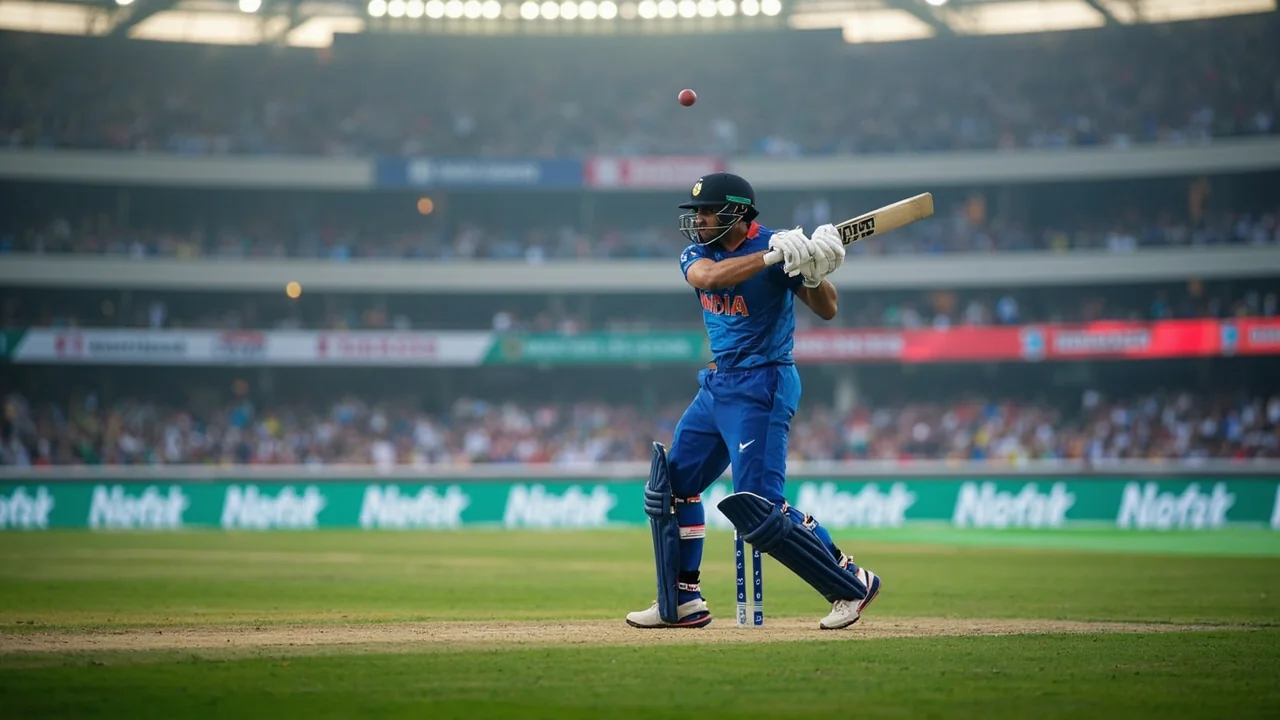
Two weeks on, the 14 July 2026 India vs England first ODI at Edgbaston still reads as one of the cleanest pre-series setup pieces of the Indian summer. England won the toss and chose to bat, India came in with a settled eleven captained by Shubman Gill, and the broadcast was split in the way Indian viewers have come to expect — Sony Sports Network on television, JioHotstar on the app and website. This Googly11 news-desk retrospective pulls the verified pre-match record back together: the toss, both playing XIs, the squad changes that brought Prince Yadav and Ravi Bishnoi in, and what the wider ODI head-to-head picture looked like going into the series.
· Googly11 News Desk · 9 min read · Retrospective on a 14 July 2026 match · Cricket News
The toss update that mattered for any Indian fantasy user reading the morning of the match was short and unambiguous. England won the toss and chose to bat first at Edgbaston, Birmingham, on Tuesday, 14 July 2026. The first ball was scheduled for 3:30 p.m. IST, which put the early part of the innings in the early-evening English window — a phase that tends to favour batters who can take pace off the ball early, particularly when there is some early moisture in the surface.
For pre-match fantasy users on the Googly11 platform, the decision mattered less than the bowling order it implied. England preferring to bat at Edgbaston in mid-July is a defensive choice on a ground that has historically held its colour into the second innings. The implication for Indian captaincy maths was direct: the toss gave the bowlers the chance to settle into a rhythm against a defined batting order rather than to react to a posted score, and the attack that looked most likely to benefit was the Jasprit Bumrah-led seam unit. That is the kind of detail the toss update carries when read carefully, even before a ball is bowled.
India's eleven for the first ODI was the mixture the selectors had been hinting at through the T20I phase that ended a week earlier. Rohit Sharma and Shubman Gill opened, with Virat Kohli sliding into the number three slot and Shreyas Iyer at four. KL Rahul kept wicket and batted at five. Washington Sundar, Shivam Dube and Axar Patel formed the all-round middle and lower middle order. The bowling unit was headed by Jasprit Bumrah and Prasidh Krishna, with Gurnoor Brar as the third specialist seam option. Axar Patel and Washington Sundar were the two spin options.
Three of those names — Gill, Rohit Sharma, Kohli and Bumrah — framed the experience profile. Shubman Gill was the captain, the first time India had taken the field in an ODI under his full leadership on English soil. Rohit Sharma, Virat Kohli and Jasprit Bumrah were all returning to the ODI side specifically for the England tour, which the BCCI had framed as a deliberate choice to add experience to the unit. The reading for fantasy users was that the top order and the death bowling were the security-first picks, and the middle order was the variable that would tell the most about how the series would go.
England's eleven made the changes the T20I series had been hinting at. Harry Brook captained the side, with Jacob Bethell and Ben Duckett opening. Joe Root slotted in at four, Jos Buttler kept wicket at five, and the middle order was filled by Sam Curran, Will Jacks and Jofra Archer. The spin-bowling options were Liam Dawson and Adil Rashid, with Josh Tongue completing the attack as the third specialist seamer.
The two changes from the T20I playing XI were Joe Root and Ben Duckett coming in for Phil Salt and Tom Banton. Both replacements were about red-ball and 50-over form rather than T20 momentum. Root at four stabilised the order against spin, and Duckett at the top gave England a left-handed option against the new ball alongside Bethell. For Indian fantasy users, the rotation told them that the English top order was being set up for the longer format of the fifty-over game, not as a continuation of the T20I template. The captaincy was already with Brook, and the rest of the order followed the pattern he had been allowed to settle into at the back end of the T20I series.
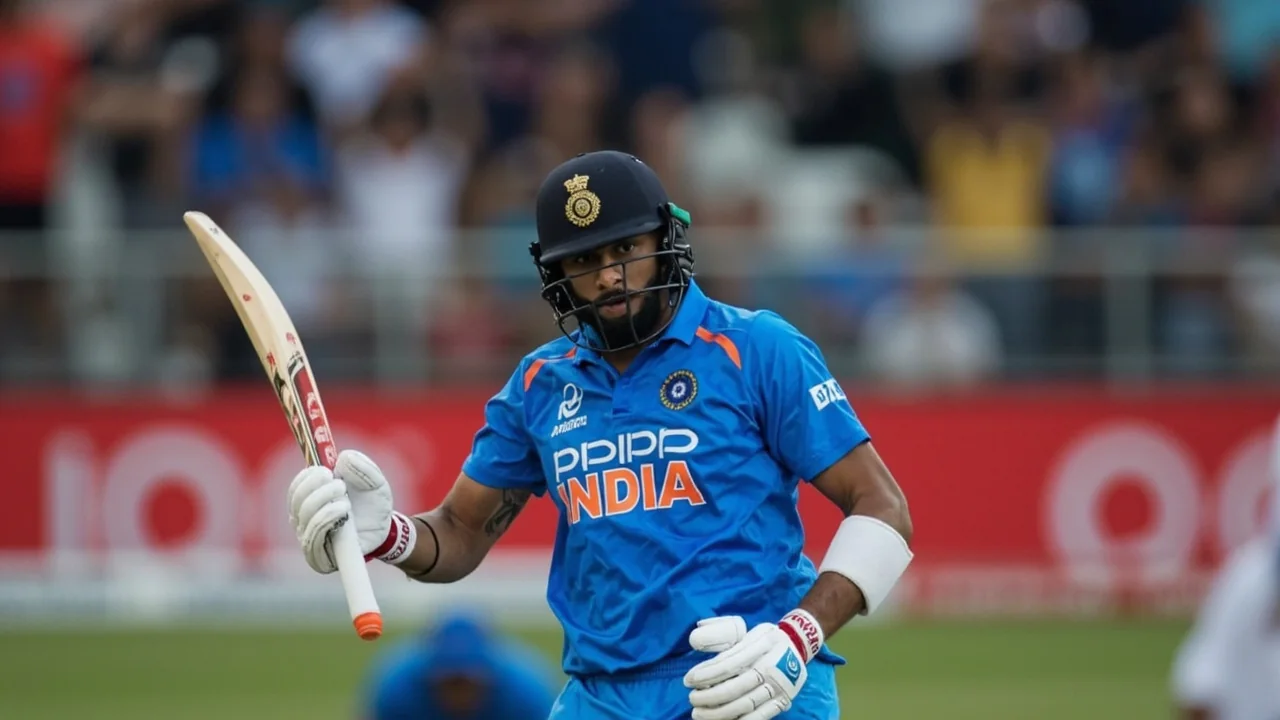
Two India squad absences were resolved before the first ODI. Harshit Rana was ruled out with a Grade 1 hamstring injury, and Varun Chakaravarthy was ruled out with a Grade 2 hamstring injury. The BCCI medical team confirmed both call-ups before the tour match window closed: Prince Yadav came in as the seam-bowling replacement, and Ravi Bishnoi came in as the wrist-spin replacement. Neither was in the starting XI for the first ODI, but their presence in the squad reshaped the selection maths for the rest of the series.
For fantasy users, the two replacements were a signal about workload management more than about the first match itself. Chakaravarthy's Grade 2 injury raised the prospect of a longer absence, which pushed Bishnoi up the pecking order even though he was not yet in the XI. Prince Yadav's addition gave India a fourth specialist seamer for the middle overs, which gave the team management flexibility on whether to play three seamers or two seamers plus two spinners on a given surface. The series opener did not need either of those pivots, but they were the levers the selectors had loaded before the series began.
The India vs England ODI series was televised in India on the Sony Sports Network, with the live feed carried on the Sony Sports 1, Sony Sports 3 and Sony Sports 5 channels depending on the match. The digital streaming rights were held by JioHotstar, with the match available on the JioHotstar app and the JioHotstar website. The 3:30 p.m. IST start time on 14 July 2026 meant the toss update landed in the late afternoon in India, the first ball was bowled in the early evening, and the innings was finishing in the late-evening window for Indian viewers.
The split broadcast arrangement has been the standard template for India's bilateral ODI cricket for the last two cycles. Sony Sports Network continued to hold the television rights through the same window, and JioHotstar — the merged entity of JioCinema and Disney+ Hotstar — carried the digital streaming rights. For Indian fantasy users following the match on Googly11, the practical implication was that the live ball-by-ball commentary on the partner feed ran alongside the contest-window countdown, which gave users a full match to lock their fantasy XI and follow the captaincy swings without leaving the screen.
Going into the first ODI on 14 July 2026, the head-to-head record in 50-over cricket between India and England stood at 110 matches. India had won 61 of those, England had won 44, and the remaining matches had been tied or yielded no result. The 61-44 split across more than a century of one-day cricket is the kind of aggregate that tends to flatten the impact of any single fixture, but it also gives a sense of the scale of the rivalry: the two teams had met more often than any other pair in the format, and the Indian ledger was the larger one.
For fantasy users, the head-to-head number is a backdrop, not a forecast. The 61-44 record had been built across eras, on surfaces that varied from green seamers to flat sub-continental decks, and across formats of ODI cricket that have changed shape several times since the 1970s. The relevant context for the 14 July 2026 opener was that India had won the recent ODI contests between the two sides more often than they had lost, and the home side — England at Edgbaston — had a slightly different recent record than the overall aggregate suggested. Reading the head-to-head as a number on its own would be misleading; reading it as the backdrop to a single fixture on a single surface is the more useful exercise.
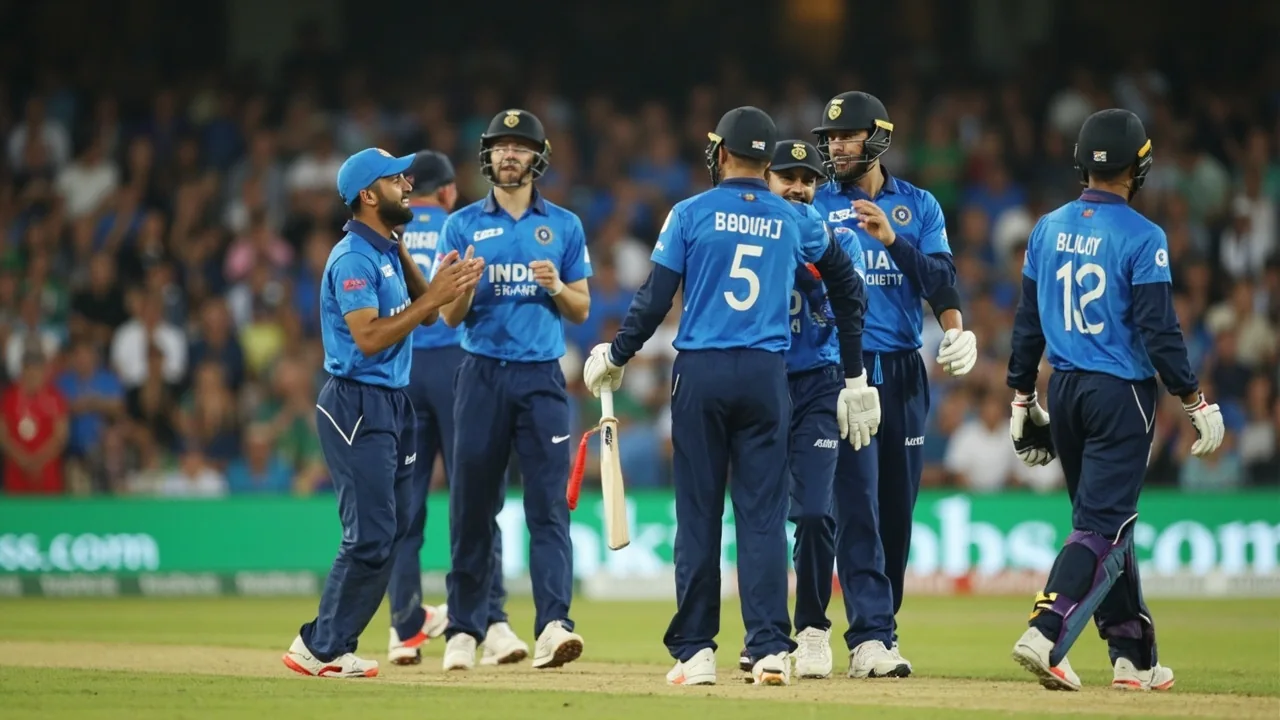
Edgbaston in mid-July has its own scoring shape. The pitch tends to offer a little seam movement in the first ten overs, holds its colour through the middle phase, and flattens into the back end of the chase when the lights come on. The boundary dimensions are not the shortest in England, but the straight boundary is one of the more generous ones, which gives batters who can hit down the ground a slight edge over those who rely on the square boundaries. The toss decision — England choosing to bat — usually reflects a captain who wants to use the new ball first and chase a defined total under lights.
For fantasy users, the Edgbaston-specific takeaways are mostly about player archetypes. Wrist-spinners at Edgbaston tend to do more scoring work than strike-bowling work in the middle phase. Pace bowlers who can hit the hard length consistently outperform those who rely on swing. Batters who can rotate strike against spin in the middle overs tend to be more valuable than batters who need a boundary ball every over. None of this is unique to this fixture, but combined with the toss decision it gives the captaincy maths a clearer frame than the headline playing XIs alone.
This was the first ODI in which India were captained by Shubman Gill against an England side captained by Harry Brook. The two appointments had been made in their respective T20I windows, and the ODI series was the first chance to compare them in the fifty-over format. Gill had been India's ODI vice-captain through the 2025 Champions Trophy in Dubai and had assumed the full captaincy in the periods when Rohit Sharma was being rested. Brook had taken the England white-ball captaincy during the back end of the 2025 home summer and had been confirmed in the role through the 2026 World Cup build-up.
The stylistic contrast was the interesting part. Gill's captaincy through the T20I phase had been measured — he had rotated bowlers early, kept his catchers in conservative positions, and made few fielding changes in the powerplay. Brook's captaincy had been more assertive — he had been quicker to bring spin on in the middle phase and had used the match-up options against specific batters earlier in the innings. The ODI format gave both of them more time to work with, and the toss decision by Brook suggested he was comfortable taking the new ball first and letting his bowlers dictate the early rhythm rather than responding to an Indian total.
Reading the first ODI two weeks later from the Googly11 news desk, the fantasy-relevant takeaways are sharper than they were on match day. The Indian top order had a defined role — Rohit and Gill to use the powerplay, Kohli and Iyer to consolidate, KL Rahul to stabilise. The lower middle order had a defined role — Sundar and Dube to add quick runs, Axar to anchor the spin-friendly middle phase. The bowling unit had a defined role — Bumrah at the death, Prasidh Krishna with the new ball, and the spin pair to take the middle overs. None of that was a fantasy call; it was the structure the selectors had laid out, and the fantasy XI was best built around it.
The English side was harder to predict fantasy-wise, because the Brook-led top order was still being defined. Bethell and Duckett had not opened an ODI together before the series, and the middle order below Root was a mix of all-rounders and bowlers. That meant the safer English captaincy options were Root and Buttler, and the higher-variance options were the new-look top order. Two weeks on, with the rest of the series behind them, the fantasy verdict on the first ODI is that the Indian structure held up better than the English structure, and that the toss decision should be read as a defensive choice that did not pay off as well as the England camp might have hoped.
The first ODI of an India-England series at Edgbaston has a habit of setting the tone for the rest of the tour. The 14 July 2026 opener was no different. The bowling order and the batting order that emerged from the first match carried through the rest of the fixtures with small adjustments. The English decision to field an extra seamer in the first ODI suggested that the management was not expecting the surface to turn sharply, and that shaped the rest of the series too. The Indian decision to play Axar Patel and Washington Sundar as the two spin options signalled that the team was comfortable with the depth of the batting even on a flat deck.
For Googly11 fantasy users following the rest of the series, the practical read was that the first ODI was a calibration match. The bowlers who picked up wickets in the first ten overs of the first ODI were the ones who carried the workload through the rest of the series. The batters who rotated strike in the middle phase were the ones who built the totals that decided the later matches. The captaincy maths that worked in the first ODI — picking a captain from the side that had the clearer role definition — held up through the rest of the series. That is the kind of pattern that only becomes visible after a few matches have been played, and the news desk continues to follow it across the rest of the England tour.
The first ODI was played at Edgbaston, Birmingham, on Tuesday, 14 July 2026, with the first ball scheduled at 3:30 p.m. IST. India were the touring side; England were the home side.
England won the toss and chose to bat first. The decision was confirmed in the pre-match toss update at Edgbaston on the morning of the match.
India fielded Rohit Sharma, Shubman Gill (captain), Virat Kohli, Shreyas Iyer, KL Rahul (wicketkeeper), Washington Sundar, Shivam Dube, Axar Patel, Gurnoor Brar, Jasprit Bumrah and Prasidh Krishna.
England fielded Harry Brook (captain), Jacob Bethell, Ben Duckett, Joe Root, Jos Buttler (wicketkeeper), Sam Curran, Will Jacks, Jofra Archer, Liam Dawson, Josh Tongue and Adil Rashid.
The match was televised in India on the Sony Sports Network and streamed on the JioHotstar app and website. Sony Sports Network held the television rights, and JioHotstar held the digital streaming rights for the series.
Prince Yadav and Ravi Bishnoi were called in as replacements for Harshit Rana and Varun Chakaravarthy, who were ruled out with Grade 1 and Grade 2 hamstring injuries respectively. The replacement call was made before the tour match window closed.
Going into the 14 July 2026 match, the ODI head-to-head record stood at 110 matches, with India winning 61 and England winning 44. The remaining matches had been tied or yielded no result.
The natural next read on the India vs England ODI series is the second ODI at Lord's on Saturday, 18 July 2026, which featured the same broadcast arrangement on Sony Sports Network and JioHotstar. The Lord's surface rewards a slightly different bowler profile than Edgbaston — the slope from the pavilion end can punish batters who over-commit on the off side, and the new ball tends to move a little more in the first hour. That makes the match-up between India's pace attack and England's new opening pair even more interesting, and it gives fantasy users a fresh captaincy challenge before the rest of the series moves to the south of England. The Googly11 fantasy desk will keep tracking the rest of the series through the same lens, with the verified pre-match record acting as the baseline for every later fixture.
For the longer view, the India vs England ODI series is one of the last bilateral windows before the 2027 ODI World Cup cycle narrows. The squad rotations across the rest of the series will tell the selectors how settled the top order is, how much workload the pace unit can absorb, and how much Axar Patel can be relied on as the spin-bowling all-rounder across conditions. Each of those questions was opened, but not closed, by the first ODI at Edgbaston. The later fixtures will give them clearer answers, and the news desk will read them in the same calendar.
The Edgbaston template is built: Bumrah at the death, the Rohit-Gill-Kohli top order, Axar in the middle overs, and the captaincy call priced against the 2027 World Cup cycle. Rs 1 contests, sub-30-minute UPI withdrawals, and a fresh-signing filter for every confirmed squad call. Start with code Googly11100. For the broader match-day context, the Googly11 live match desk keeps the fixture, broadcast and squad information together in one place.